
Insurance claim checklist: what insurers actually need
An average home contents insurance claim takes 11 days to settle. The fastest claims close in under 48 hours. The difference isn't the policy or the insurer — it's how complete the claimant's paperwork is when they hit "submit". Here are the 8 documents adjusters consistently ask for, and how to have them ready before you ever need to call.
1. Proof you owned the item
The single most common reason claims get delayed: the insurer can't verify you actually owned what you say you owned. They will accept any of the following:
- Original purchase receipt (preferred)
- Credit card statement showing the purchase
- Photo of the item taken in your home with timestamp metadata
- Manufacturer registration confirmation email
Notice receipts are at the top. They short-circuit every other check.
2. Proof of value
Insurers settle on either actual cash value (depreciated) or replacement cost — depending on your policy. For both, they need a current price reference:
- Original price (from the receipt)
- Or current MSRP (a manufacturer page screenshot works)
- Or a recent appraisal for high-value items (jewelry, art, watches)
3. Serial number, model number, or both
For electronics, appliances, watches, and bikes, the serial number is usually required. It's also how the insurer flags the item as "stolen" with manufacturers (so the unit becomes traceable). Take photos of the model plates the day you bring something home.
4. Photos of the item — in your home
Stock photos of the model don't help. Photos of the item in your living room, with a date-stamped phone shot, do. Even better: photos that include some kind of identifying context (your TV stand, your wall, your serial number visible on the back).
5. The original box, if you have it
This sounds silly until you make a claim and the adjuster asks for it. The original box has the model number, serial sticker, and certifications printed on it. For high-value electronics, keeping the box for 12 months can shave days off a claim.
6. Police report (for theft)
If the loss involves theft, every reputable insurer requires a police report — usually within 24-48 hours of discovering the loss. Some require it within 24 hours specifically. Do this first, before calling the insurer.
7. Inventory list with values
For larger losses (fire, flood, burglary affecting multiple items), insurers want a written list. Itemized. With approximate values. The clearer your list, the faster the desk-adjuster cycles your file.
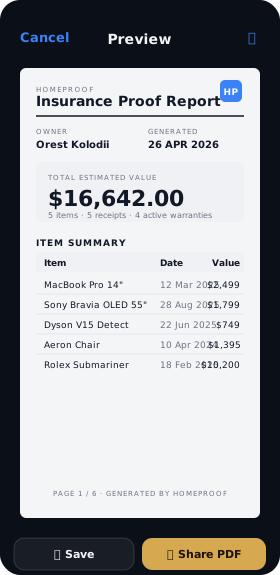
This is where a generated Insurance Proof Report earns its keep. A single PDF that contains:
- Your name and address (claimant block)
- Total estimated value
- One row per item: name, purchase date, value
- One detail page per item: photos, receipt, serial, warranty
An adjuster who receives this PDF takes you seriously. An adjuster who receives 32 separate JPEGs and a hand-typed list does not.
8. Communication log
Keep a dated log of every call, email, and document you send to the insurer. If a dispute arises later (it's a coin flip with major losses), the adjuster's notes vs. yours determine the outcome. Note who you spoke to, when, and what they said.
Insurance claims are won or lost in the documentation phase, not the negotiation phase.
The 30-minute prep that pays off
Spend 30 minutes a year doing this:
- Walk through your home with a phone camera
- Photograph every item worth more than ~$200 (front, back, model plate)
- Pull up the email receipt for each — forward yourself a copy
- Save photo + receipt in one place, tagged with category and serial
- Generate the inventory PDF and email it to yourself
That's it. The next claim takes minutes instead of weeks.
Where HomeProof fits
HomeProof automates steps 2-5. Scan the receipt → fields auto-extract → photo gets attached → reminder for warranty expiry is scheduled → at any moment, generate a one-tap insurance PDF that contains your owner info, total value, item table, and detail pages. The PDF is generated on-device using PDFKit; it never touches a server.
For renters and homeowners who file even one significant claim in a decade, the time saved on a single claim pays back the $19.99/year subscription many times over.
Build your insurance vault today, before you need it
HomeProof generates insurance-ready PDFs in seconds. Free to start.
Download on theApp Store